
How to Earn Up to 280% Staking DeFi Index Liquidity by Defi Dad

Another week, another yield farming opportunity in DeFi! As gas prices have held above 100 Gwei, we’re all feeling the need to find set-and-forget yield farming strategies so today we’re going to cover a newer DeFi protocol for creating indexes on Ethereum, which offers liquidity mining rewards for simply holding the indexes.
From a traditional finance perspective, index funds are a useful type of exchange-traded-fund (ETF), as they are passively managed using preset rules that, in their typical form, assign weights to assets proportional to their market caps. Index funds allow anyone to easily increase or decrease exposure to a market by trading a single asset, and they consistently outperform actively managed funds and most individual stocks in TradFi.
We’ve all heard epic stories in crypto of “I bought X token at a few cents and now it’s up 100X” but the truth is: most people are very bad at picking tokens, stocks, etc. That’s why these new DeFi indexes are a better way to gain exposure to the upside of a newer market without having to essentially gamble as a newcomer or spend countless hours studying the markets.
In Wealth Mastery, I’ve previously covered the growth of DeFi indexes like the DeFi Pulse Index (DPI), PieDAO pies like DEFI+L or DEFI+S, and PowerPool’s indexes like PowerIndex Pool Token (PIPT). With DeFi indexes, one can hold a basket of auto-rebalancing tokens weighted by market cap, as seen with DPI boasting a $118M in market cap holding 11 DeFi related tokens vs a smaller, newer index like the PowerPool’s PIPT holding 8 tokens, split evenly at 12.5% each by weight, and just under $14M in market cap.
Indexed Finance and NDX Liquidity Mining
Related Articles

Earning Double-Digit Yield with Base’s New Flatcoin UNIT by Flat Money
Here’s how I can earn an estimated 27% APY minting and holding UNIT.


Solv Airdrop Strategy: Earn Bitcoin Yield with solvBTC
Today, I’ll show how I can deposit into solvBTC and start earning XP towards a future airdrop + 8-12% APY!
How to Farm Ethena’s ENA on Mantle Rewards Station
Today, I’ll show how I can passively farm mShards to later swap for ENA rewards for 17 more days until the campaign ends on April 26th, 2024.
The Lido of Stacks: Liquid Stacking with stSTX by Stacking DAO
Today, I’ll show how I can stack some STX with stSTX by Stacking DAO!
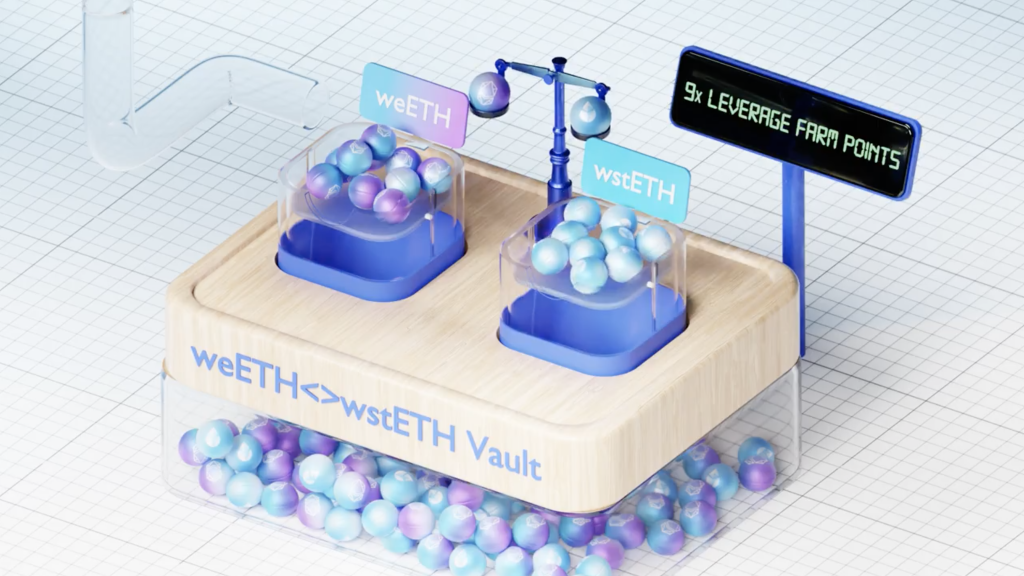
LRT Looping Strategy: Instadapp’s New Fluid Vaults for Levering Up on EigenLayer’s Launch
Today, I’ll show how I can use Fluid to lever up on weETH exposure and hence increase my ether.fi and EigenLayer points earned while collecting 3.3% APR in eETH staking yield.
ZeroLend Multi-Airdrop Strategy for EigenLayer, zkSync, Blast, and Linea
Today, I’ll show how I can act quickly to capitalize on the ZERO airdrop in addition to airdrops tied to EigenLayer, zkSync, Blast, and/or Linea.

New Omnipool Strategies: How to Earn Maximum Passive LP Yields with Opal
Today, I’ll show I can begin earning the comparably higher yields (up to 33% APR) with Opal passive omnipool strategies.
Frax L2 Airdrop Strategy: How to Earn FXTL Points
Today, I’ll show I can stake FXS to qualify for the March 6th snapshot, or at minimum begin earning FXTL in future weekly epochs beginning March 13th.

Whales Market OTC DEX: Trade Airdrop Allocations, Points, and Tokens
Today, I’ll cover how I might opt to buy points on Whales Market for an unlaunched token such as ether.fi’s.
Ethena Airdrop Strategy: DeFi’s Next Big Stablecoin with Double-Digit Yield
This week, we cover the mainnet launch of Ethena–the new protocol powering a delta-neutral synthetic dollar USDe, backed by ETH staking yield and automated, programmatic delta-neutral hedges.
Responses