
How to Short Sell on Bybit

Bear markets suck.
During times of extended falling prices, many traders feel their only option is to sit on the sidelines until markets finally hit bottom. But it doesn’t have to be this way. Short selling is a trading method to profit when prices are falling. In current times, this can be an important tool to utilize.
Today’s article explores the world of how to short-sell on Bybit. With over 10 million users and some of the most diverse trading instruments and optionalities in the industry, Bybit is one of the best exchanges to execute crypto short sells. Specifically, we will discuss:
- What is Short Selling and Why Do It
- What are the Risks
- How to Short on Bybit in Eight Easy Steps
- Available Short Sell Instruments on Bybit
There’s plenty to discuss. Let’s roll.
Are you looking for all the details on this exchange? Read our Ultimate Bybit Review here.
What is Short Selling and Why Do It
Short selling is a trading strategy that allows a trader to profit when an asset’s price is falling in value. Specifically, a trader performs a profitable short sell by selling a borrowed asset at a higher price, and then repurchasing it at a later time for a lower price.
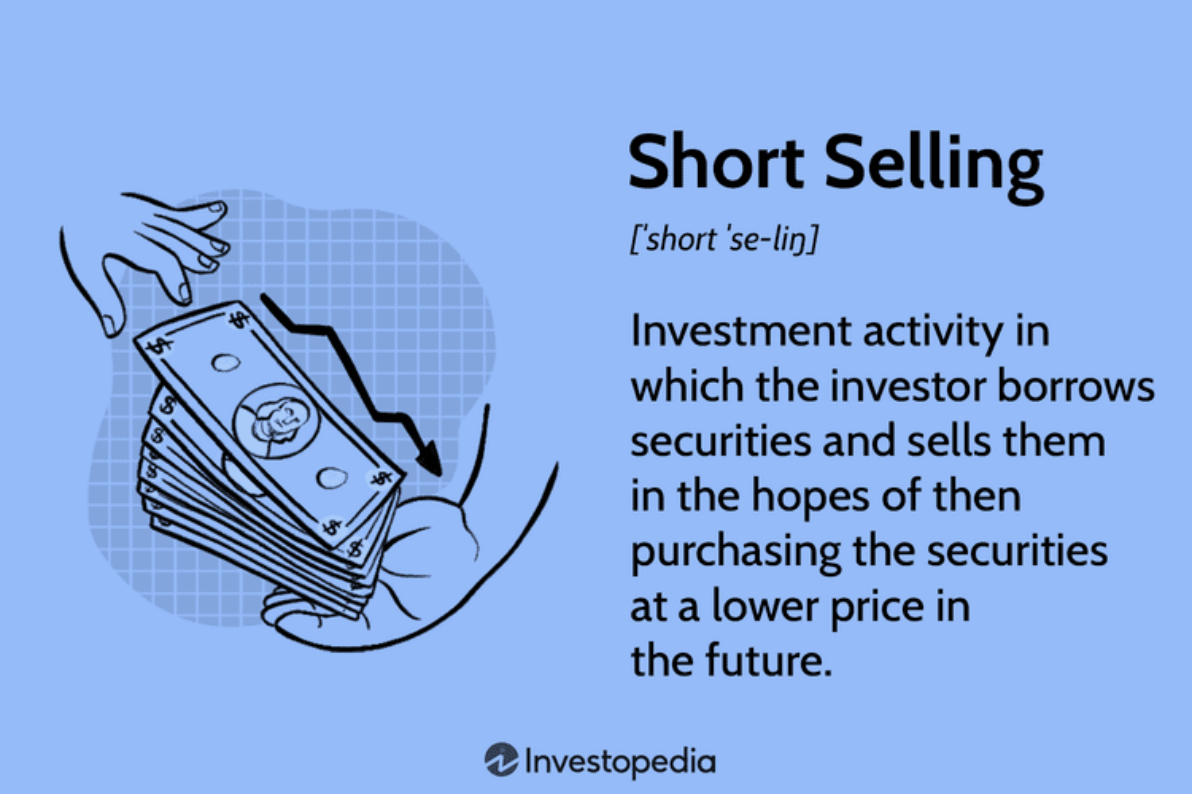
Short selling gets its name because the trader never owns the asset that they initially sell. The trader is “short” the asset because they borrow it via a loan from a lender. A successful short sell means the trader is able to pay the lender back with the asset that was originally loaned out, because it was repurchased at a lower price. The short seller’s profit is the price difference between the original sales price and the repurchase price.
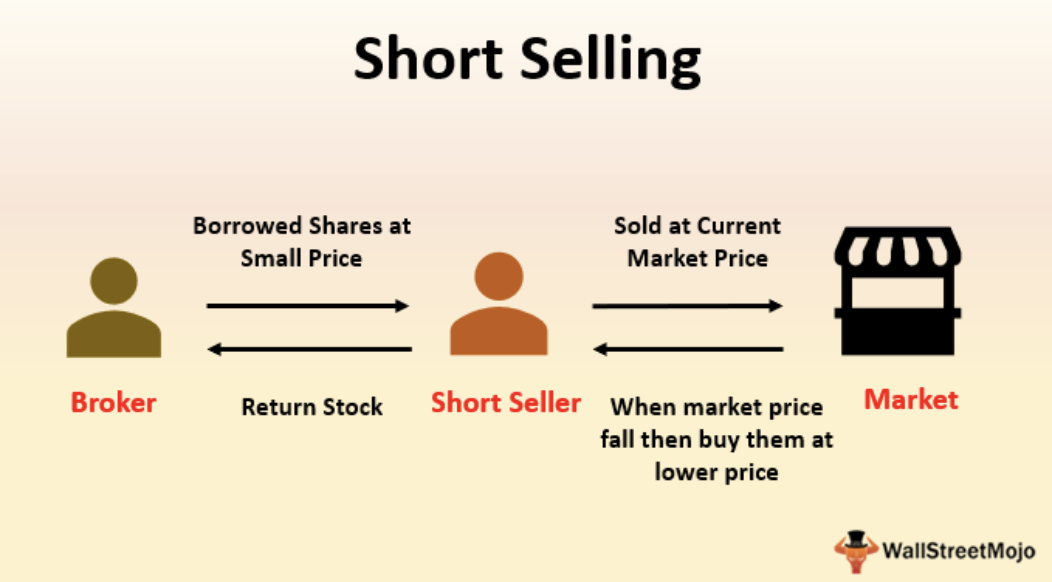
Let’s look at an example:
- Bitcoin is trading at $20,000. Alice believes that bitcoin will likely fall in price over the next few days.
- Alice borrows 1 bitcoin from a lender, and immediately sells it on the open market for $20,000.
- Over the next few days, bitcoin’s price falls to $15,000. Alice repurchases 1 bitcoin for that price.
- She returns the 1 bitcoin to the lender, and pockets $5,000 as her profit (minus lender interest payments and trading fees).
Short selling provides an avenue for traders to make money in a falling market. So long as a trader can correctly predict the direction of a market, they can make money regardless if prices are going up (longing) or down (shorting).
What are the Risks
Shorting is risky because the trader is taking out a loan which must be paid back. Thus, if the asset goes up in price (“goes the wrong way”), and the short sell is closed, the price difference between the original sales price and the higher repurchase price would be the amount lost on the trade. And because any asset theoretically has no price ceiling, short sellers can lose all their posted collateral via liquidation.
Liquidation occurs when the collateral can no longer cover any further price increases. When trades are going the wrong way, many traders will add additional collateral to cover their positions in an attempt to avoid liquidation. The hope is that the price will eventually fall and the trade will eventually become profitable. But remember, because this is a loan, the lender is charging interest, which continues to accumulate so long as the trade is open.
Stop loss limits help traders minimize their risk. With a stop loss, traders lock in acceptable risk and avoid losses beyond what they are willing to tolerate. At the end of the day, remember that short selling is not for beginners. And leverage is only for advanced, experienced traders.
How to Short on Bybit in Eight Easy Steps
The following is a concise step-by-step instruction for how to execute a derivative short sell on Bybit. A glossary of terms is provided in the following section in case any of the terms are unfamiliar.
- Fund your derivatives account. You’ll likely want to fund with either USDT or USDC.

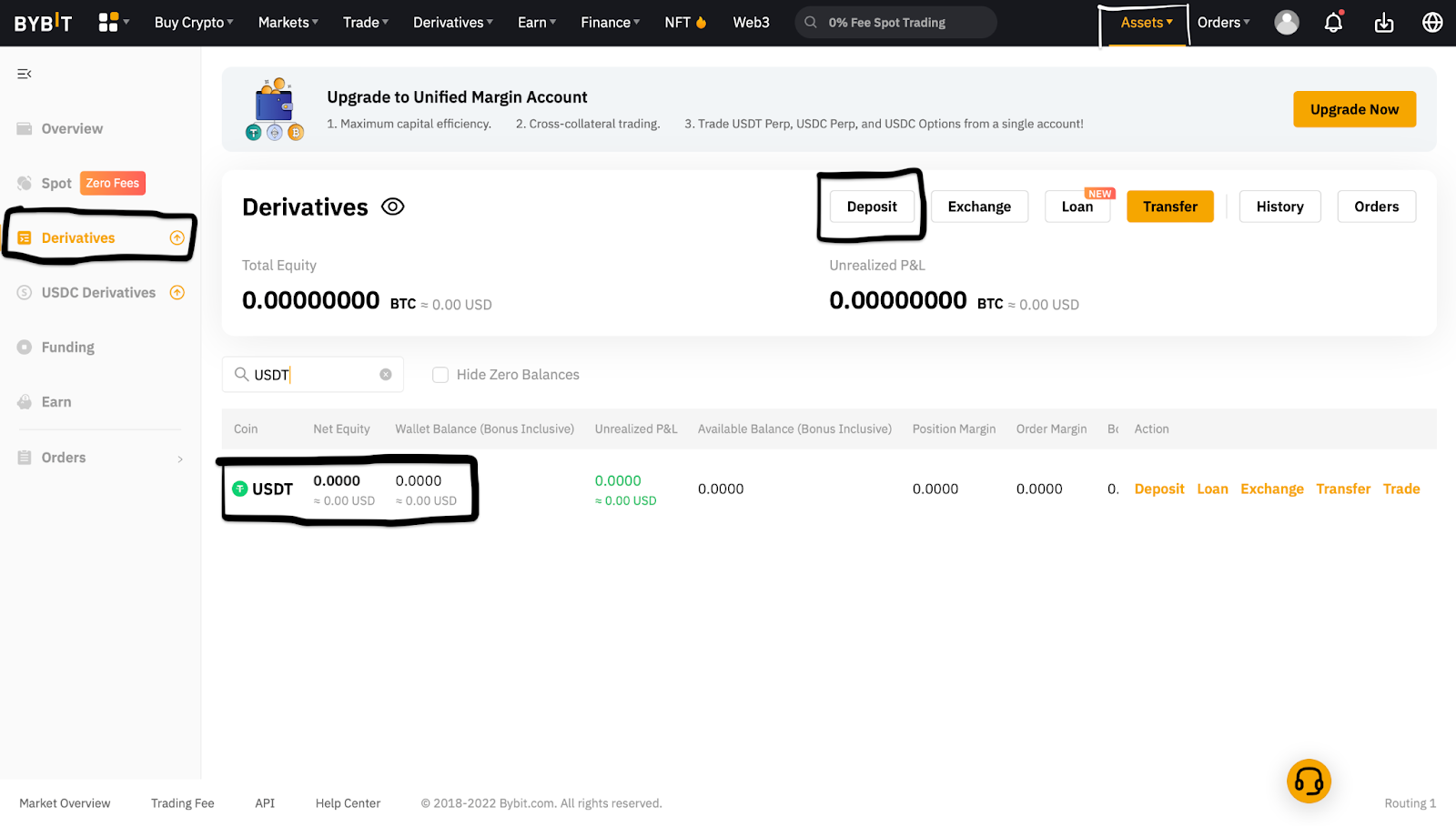
- Select your preferred derivatives contract. For this example, we will be using the BTC-USDT perpetual contract.
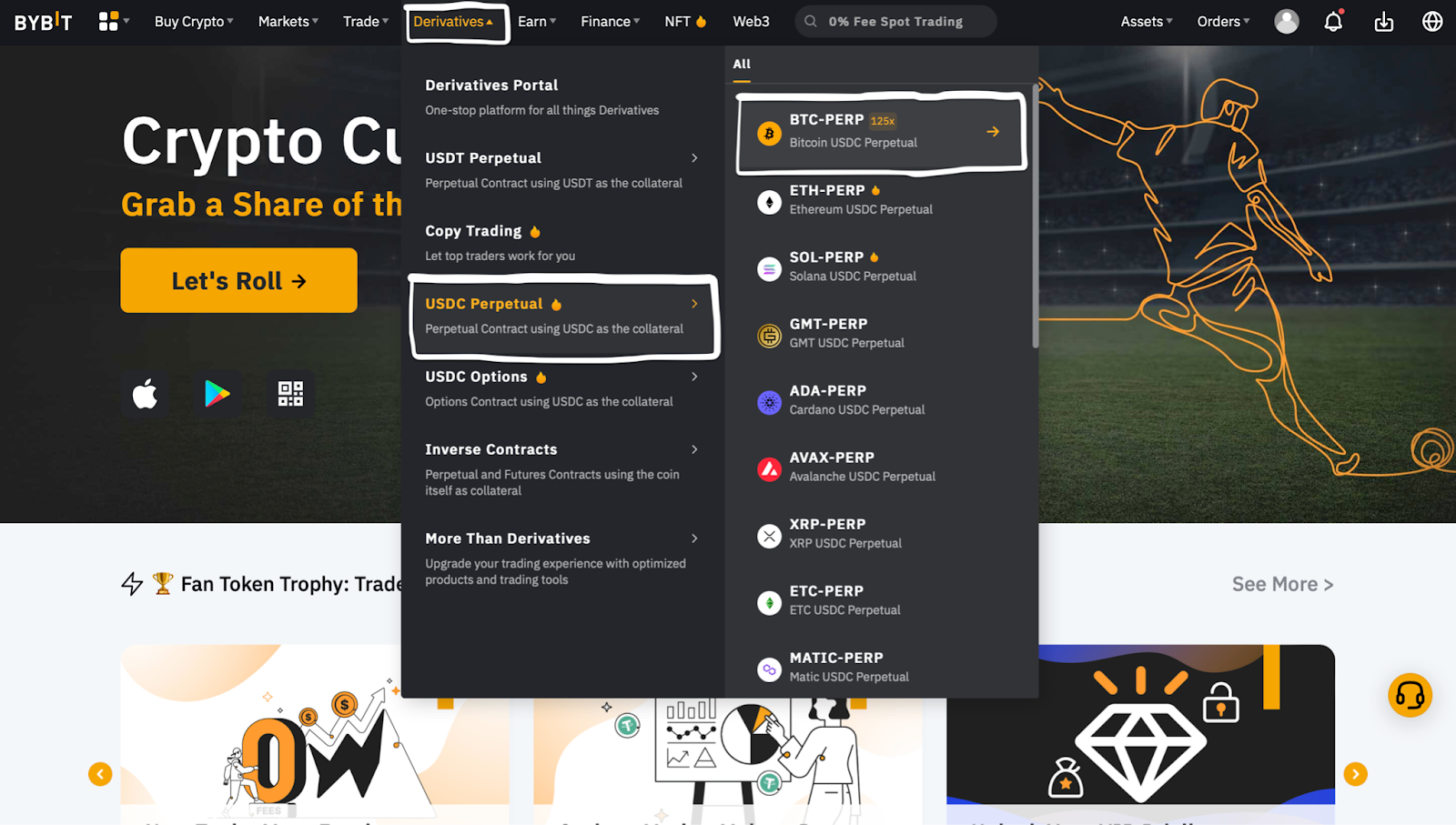
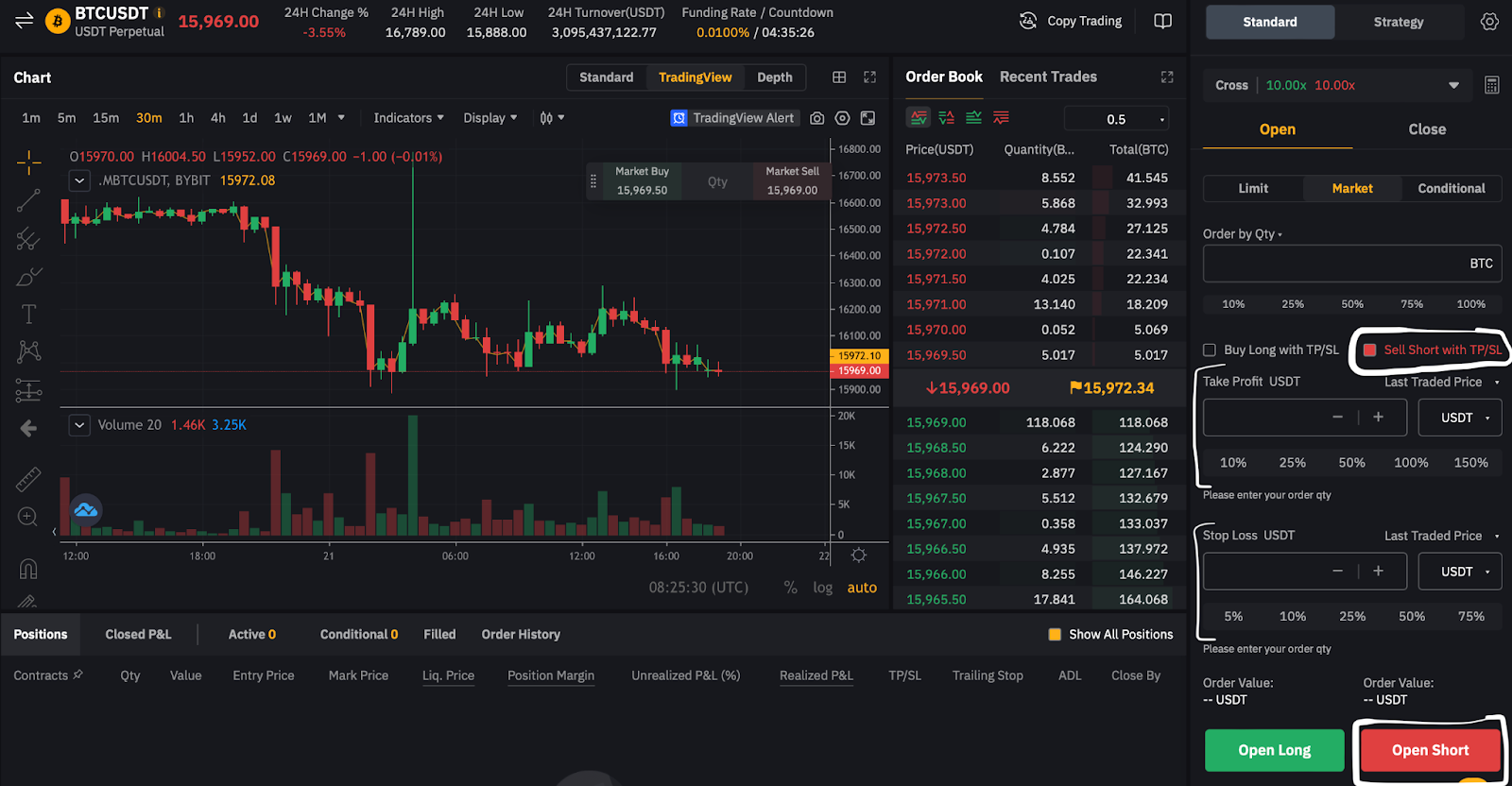
- Here’s the trading desk. The far right section is the order interface.
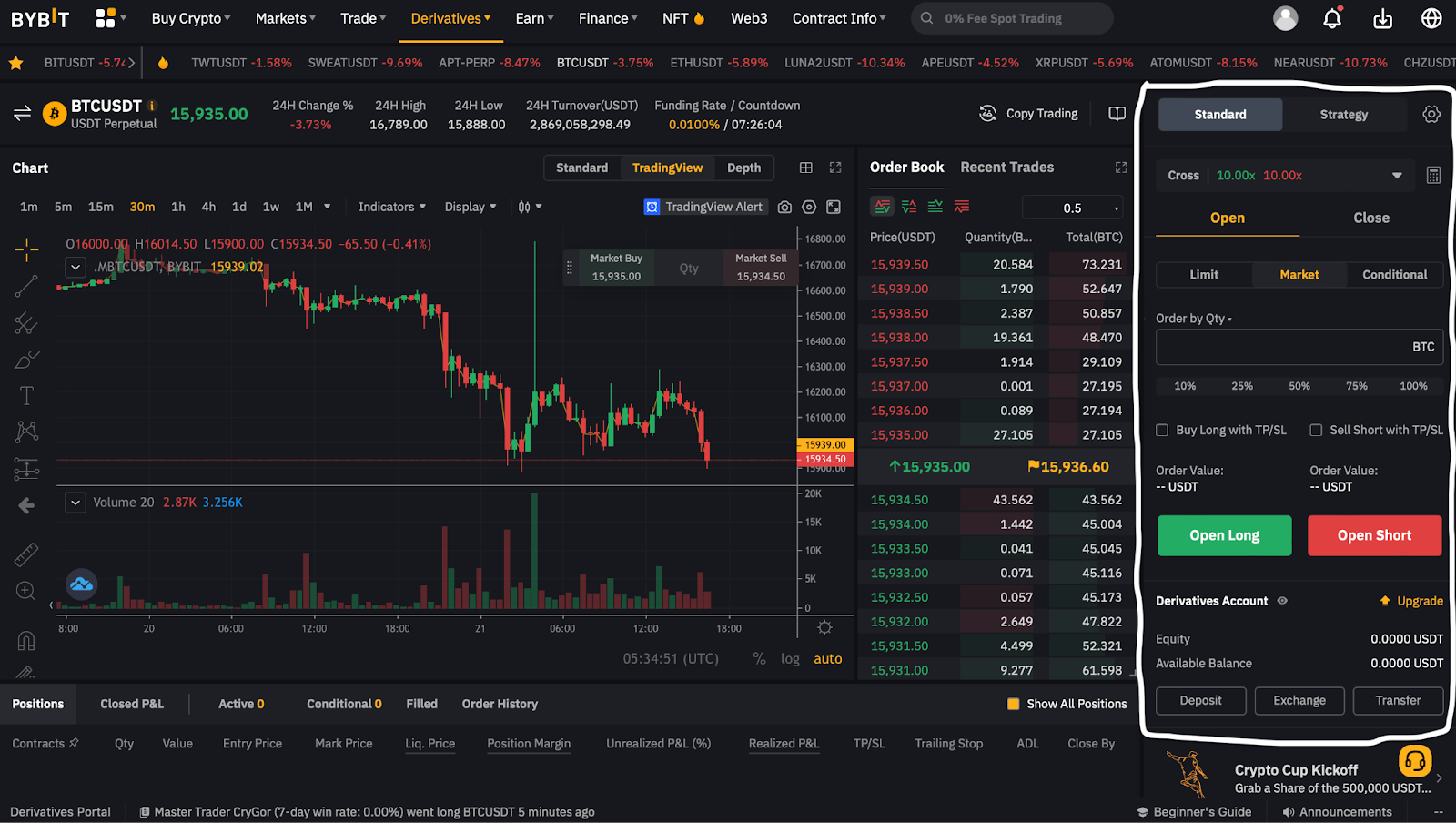
- First, choose either cross or isolated margin. Set the amount of short leverage you want, if any.
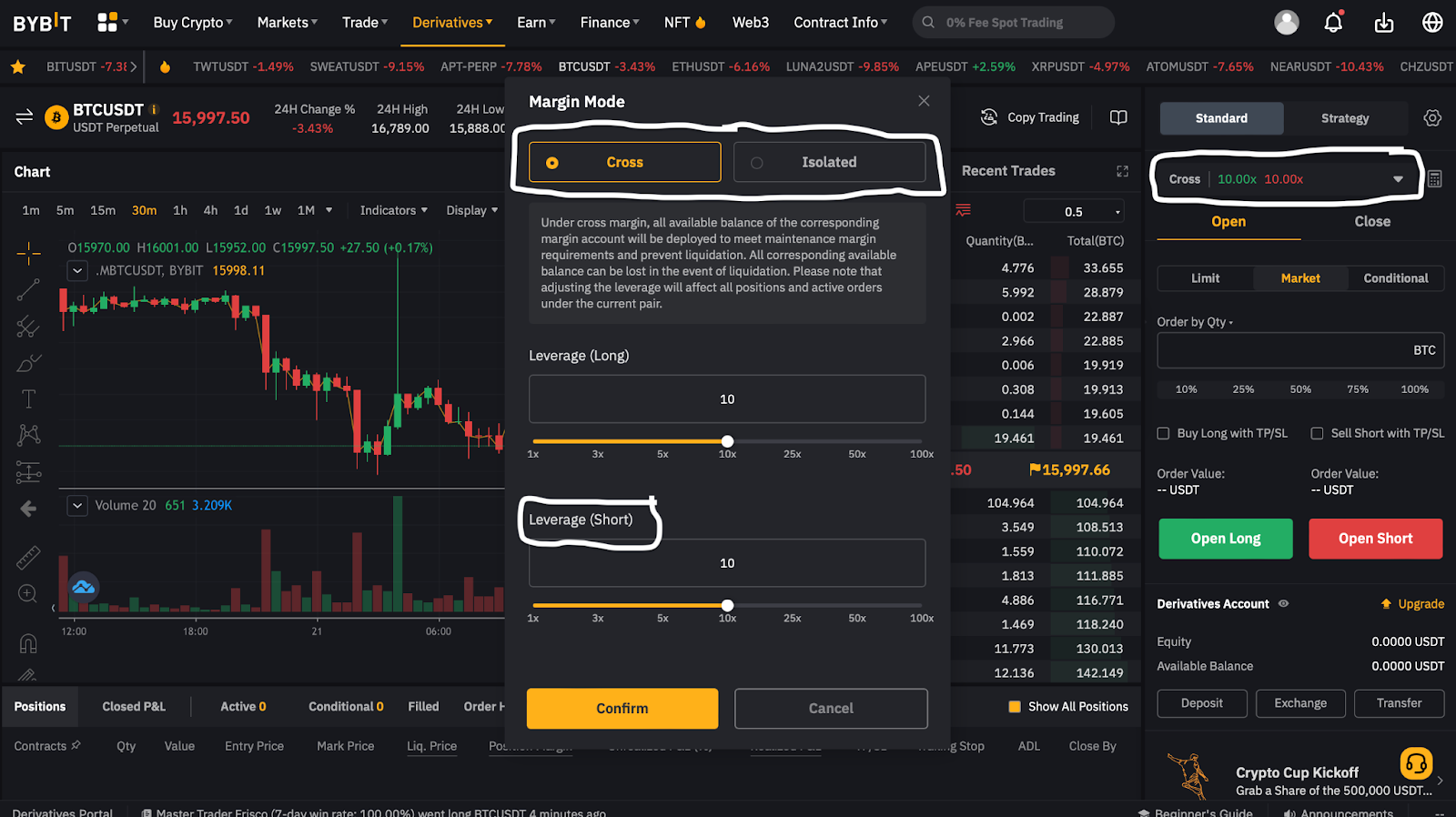
- You are “opening” a short sell, so you are using the open tab. Select if you want a limit, market, or conditional order. Specify how much of the asset you want to short.
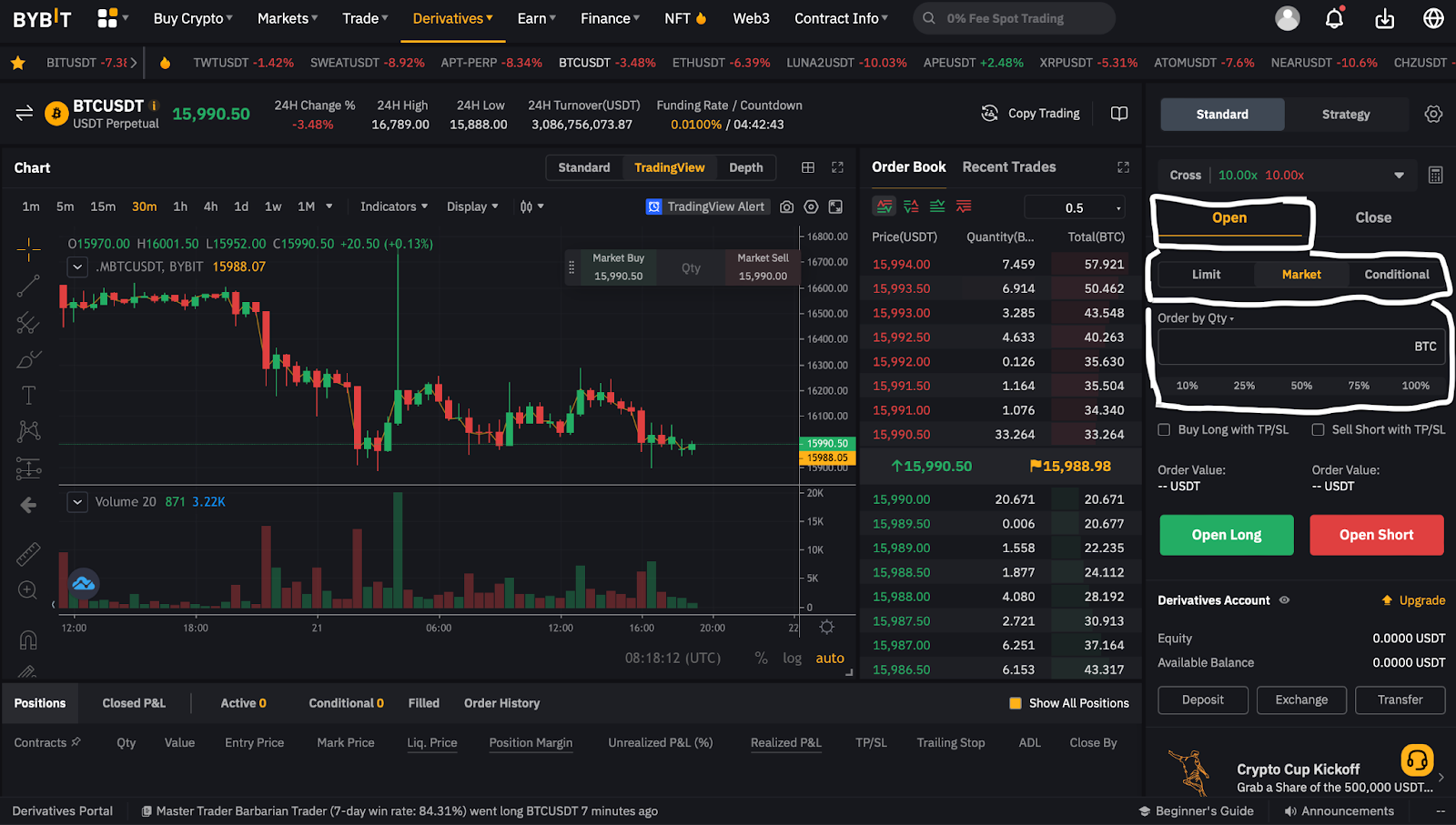
- In order to minimize risk, you’ll want to select Sell Short with TP/SL. Set your take profit and stop loss limits. Then select Open Short. Congratulations, you’ve now successfully opened a short sell order!
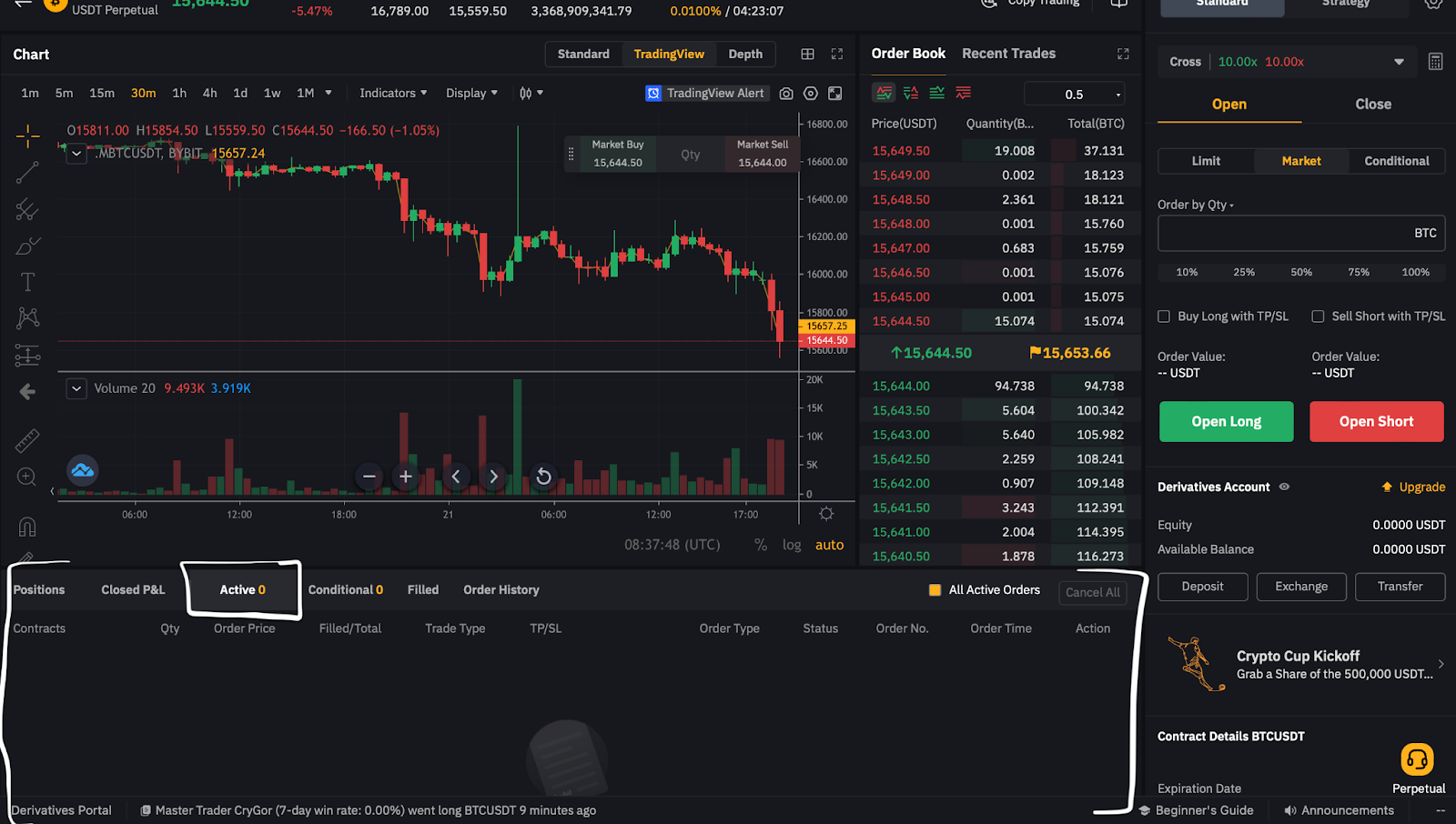
- Once opened, the order will appear under the active tab at the bottom of your trading desk. You can edit your take profit or stop loss limits when the order is open, and you can post additional collateral if necessary.
- If you’re using TP/SL, you don’t have to monitor your trade. However, if you need to close your position early, select the Close tab, specify how much of the asset you want to repurchase, and then select Close Short.
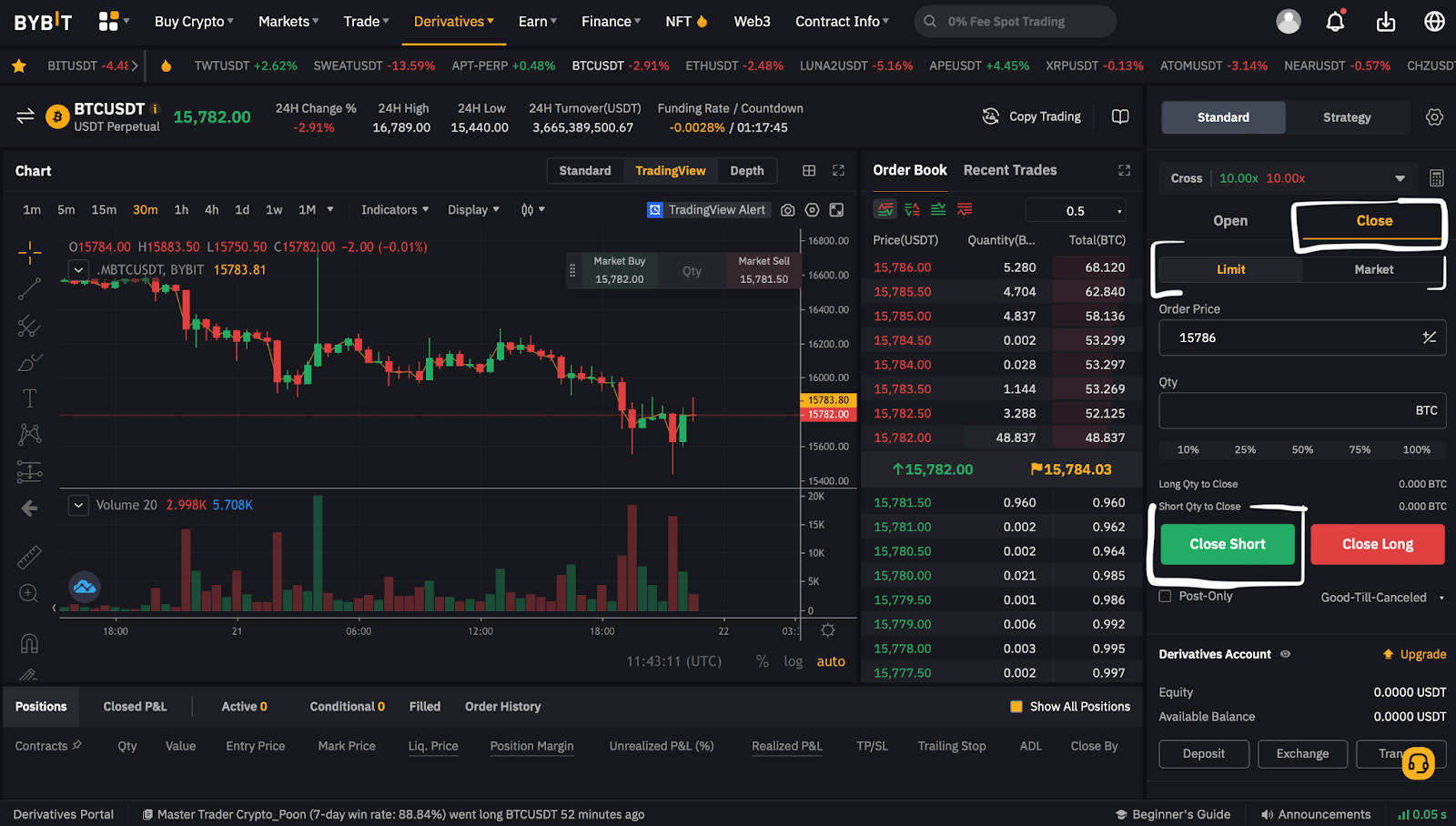
That’s it! You’ve now executed a derivatives short sell on Bybit in eight steps.
Glossary of Terms
- Margin: This means collateral. Because short selling requires taking out a loan, a short seller must post collateral in order to protect the lender, in the event that the trade goes the wrong way.
- Cross Margin: The entire available balance under the trader’s margin account will be used to meet margin requirements. Thus, a trader’s entire margin account can be exposed to liquidation.
- Isolated Margin: Only the amount of margin allocated for the specific trade is used to meet margin requirements. Only this allocated margin is at risk of liquidation.
- Leverage: Financial tool allowing traders to increase their market exposure beyond their initial investment. For example, 10X leverage means a trader can enter a position for $10,000 worth of BTC with only $1,000 of collateral. Bybit offers up to 100X leverage. The odds of gains, losses, and liquidation exponentially increase as leverage increases.
- Limit Order: In terms of a short sell, this is an order to sell an asset at a specific price. The asset will not be sold until it is triggered by that price.
- Market Order: An order to sell an asset at the current market price.
- Conditional Order: Either a limit or market order to sell an asset that only takes effect once a certain condition has been met. Bybit allows traders to set up conditions based on Mark Price, Last Traded Price, or Index Price.
- Take Profit: A profit exit strategy that ensures that the short sell is automatically closed once the asset falls to a certain price. The take profit price will always be lower than the price that the asset was initially sold for.
- Stop Loss: A risk management tool that automatically protects the trader in case the trade goes the wrong way. For a short sell, the stop loss price will always be higher than the price that the asset was initially sold for.
Available Short Sell Instruments on Bybit
Bybit offers multiple short-sell instruments. The following is a list of available instruments and a short description.
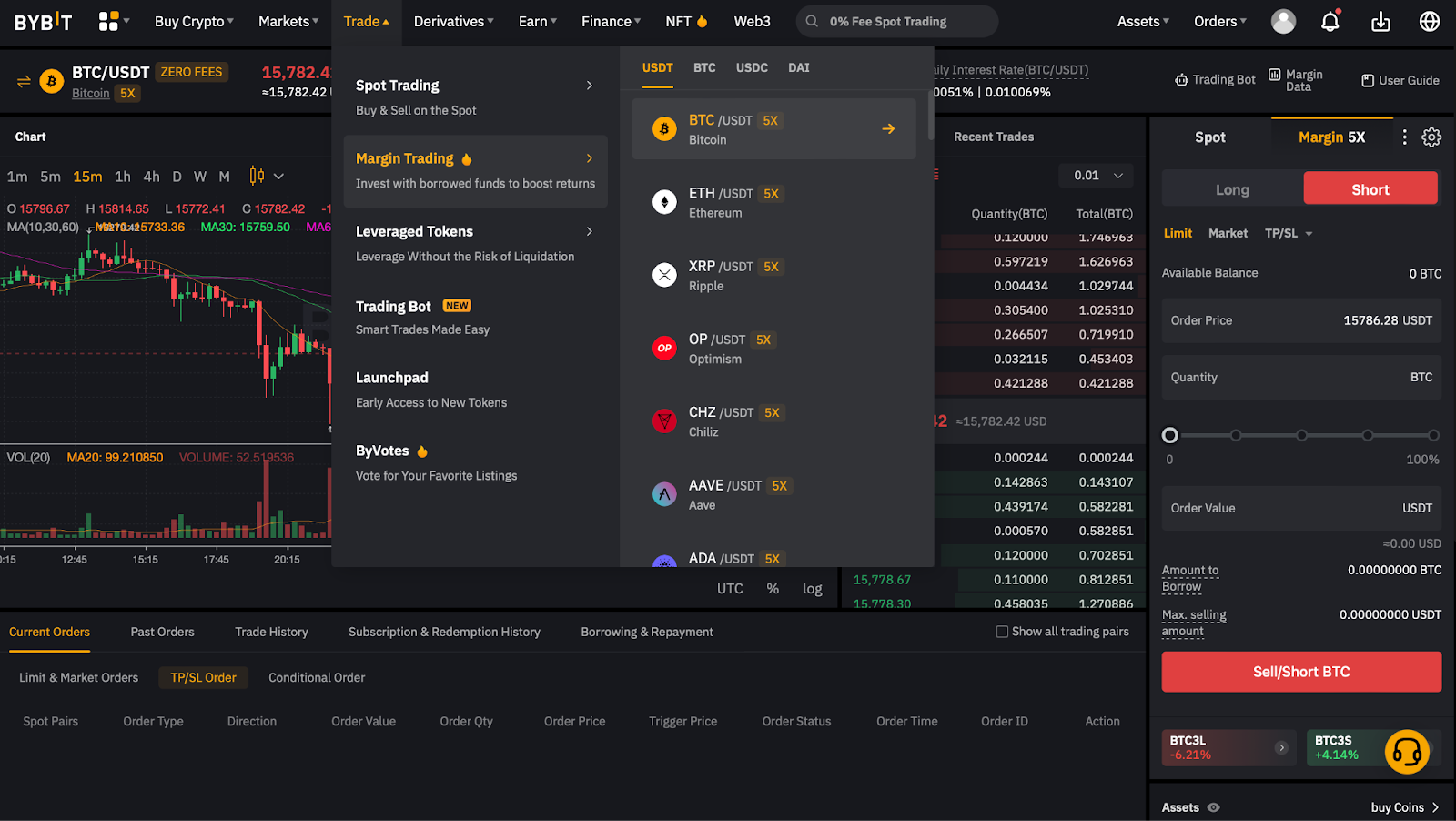
- Spot Short Selling: This is the most simple and direct method for performing a short sell. Borrow crypto at a specific price, sell it, attempt to repurchase it at a lower price, pay back the lender, and take profits. Easy peasy. Bybit’s spot short-sell order menu has less optionalities than the other instruments discussed below.
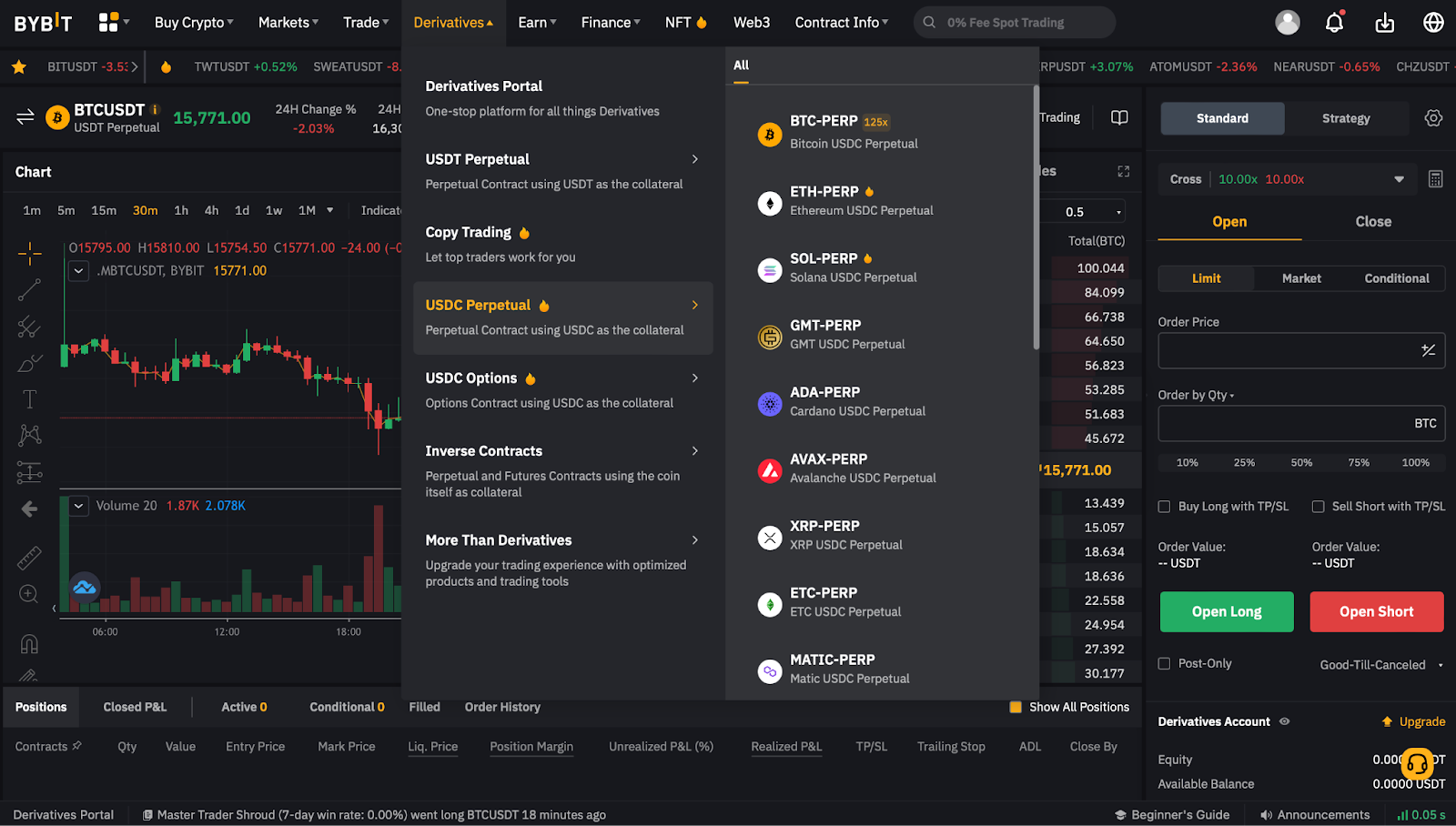
- Derivatives Short Selling: The step-by-step guide above is an example of this. Derivatives are contracts whose value is dependent on the price of the represented asset. The bulk of Bybit’s derivative short-sell options take the form of perpetual futures contracts — meaning, there is no expiration date. Short-sell trades can stay open for as long as the trader desires. There are lots of customization options (margin types, leverage, etc.) when creating derivative short sells on Bybit.
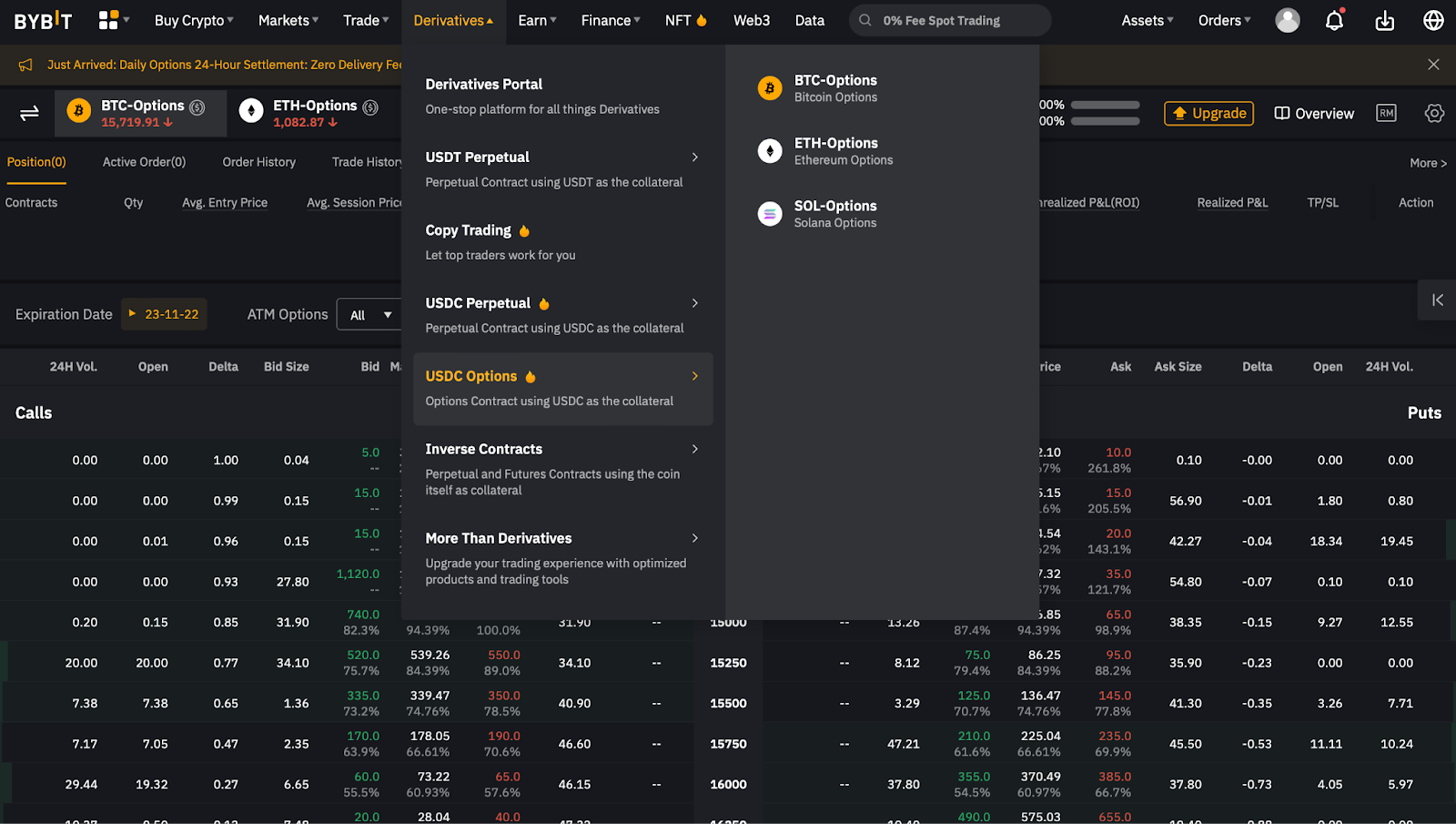
- Crypto Put Options: Put Options provide an additional way for traders to profit when asset prices are falling. Put Options give the purchaser the right, but not the obligation, to sell a crypto at a predefined price at a predetermined date. If Bitcoin is trading at $20,000, but Alice believes it will be trading at $15,000 one month from now, she can buy a Put Option which gives her the right to sell Bitcoin at $20,000 one month from now. In order to do this, she must pay a premium to the Put Option seller. If bitcoin’s price falls, her profit is the price difference between the lower price and $20,000. If bitcoin’s price is above $20,000, Alice would take the option to not sell the bitcoin, and her loss would be the amount she paid in premiums.
Conclusion
Bear markets do not have to mean a waiting game with zero profits. Short selling says otherwise! Bybit offers a diverse menu of short-sell instruments, contracts, and customization options to satisfy even the most sophisticated traders.
Remember that short selling and leverage are not for beginners. If you are new to short selling, start with very small positions, use stop losses, and don’t use leverage. Educate yourself and give yourself time to hone your skills. If you approach short selling with patience and rationality, and don’t treat it like a casino, you will have a way to make money when markets are falling. This is a big deal!











Responses