Before we get started, this is not a recommendation or endorsement to buy any token(s) mentioned including OGV.
As we’ve covered the rise of LSTfi, the surge of new products sometimes brings unwanted confusion for DeFi newbies seeking the best liquid staking yield for their ETH. Since 2017, the DeFi product team at Origin Protocol have been building their flagship OTokens, specifically OUSD, which provides holders with exposure to the “best yields available on USD with none of the hassles typically associated with yield-farming.” OUSD is a self-custodial, yield-generating stablecoin that is 100% redeemable for DAI, USDC, and USDT. OUSD is currently earning its holders 4.82% APY, as of this writing.
Recently launched in May 2023, Origin’s newest OToken is called OETH, which uses the same codebase but accepts ETH collateral and utilizes different combinations of strategies for liquid staked ETH. OETH helps you accumulate more ETH. OETH tracks the price of ETH instead of the US dollar. OETH is 100% permissionless and always redeemable 1:1 for the ETH collateral backing it.
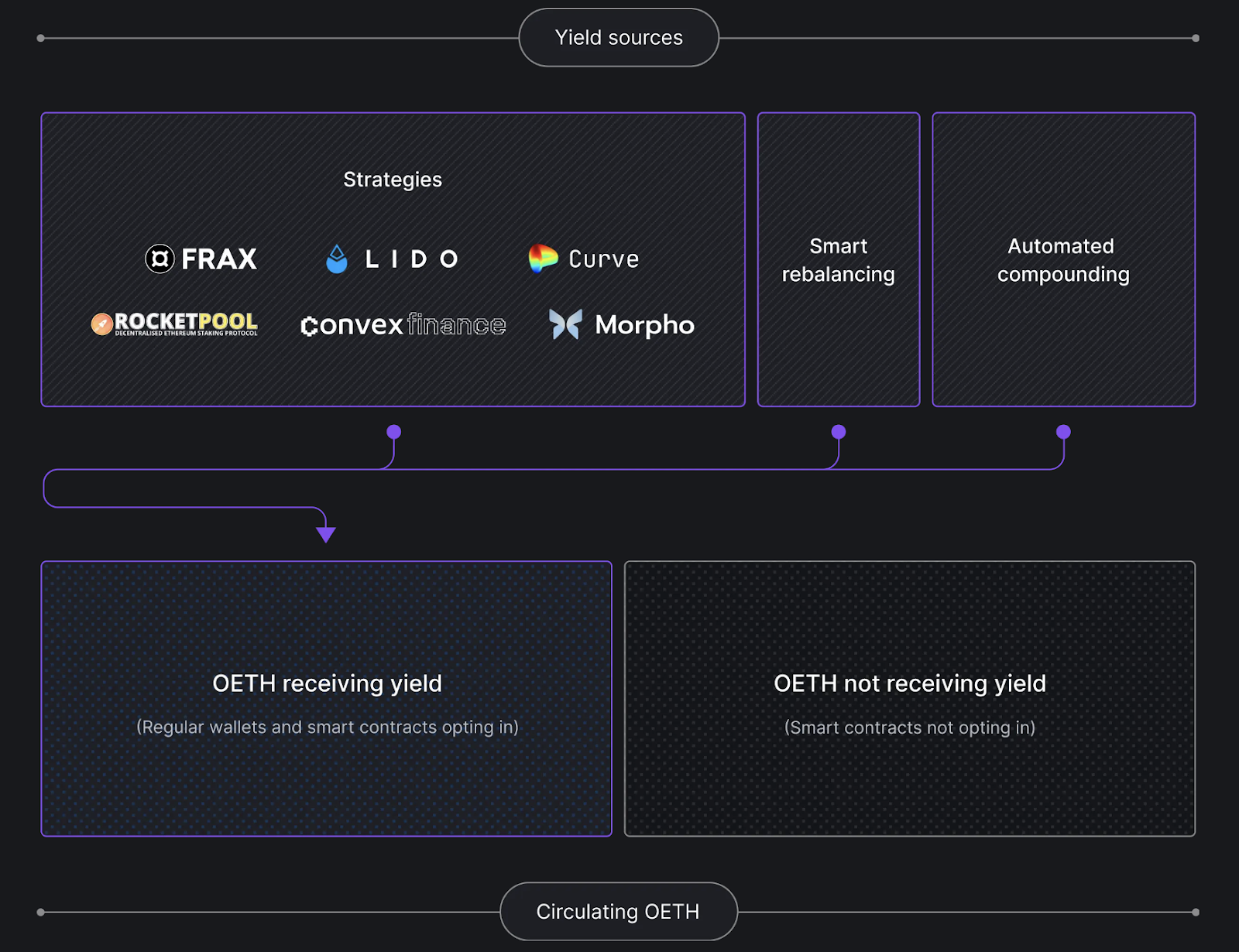
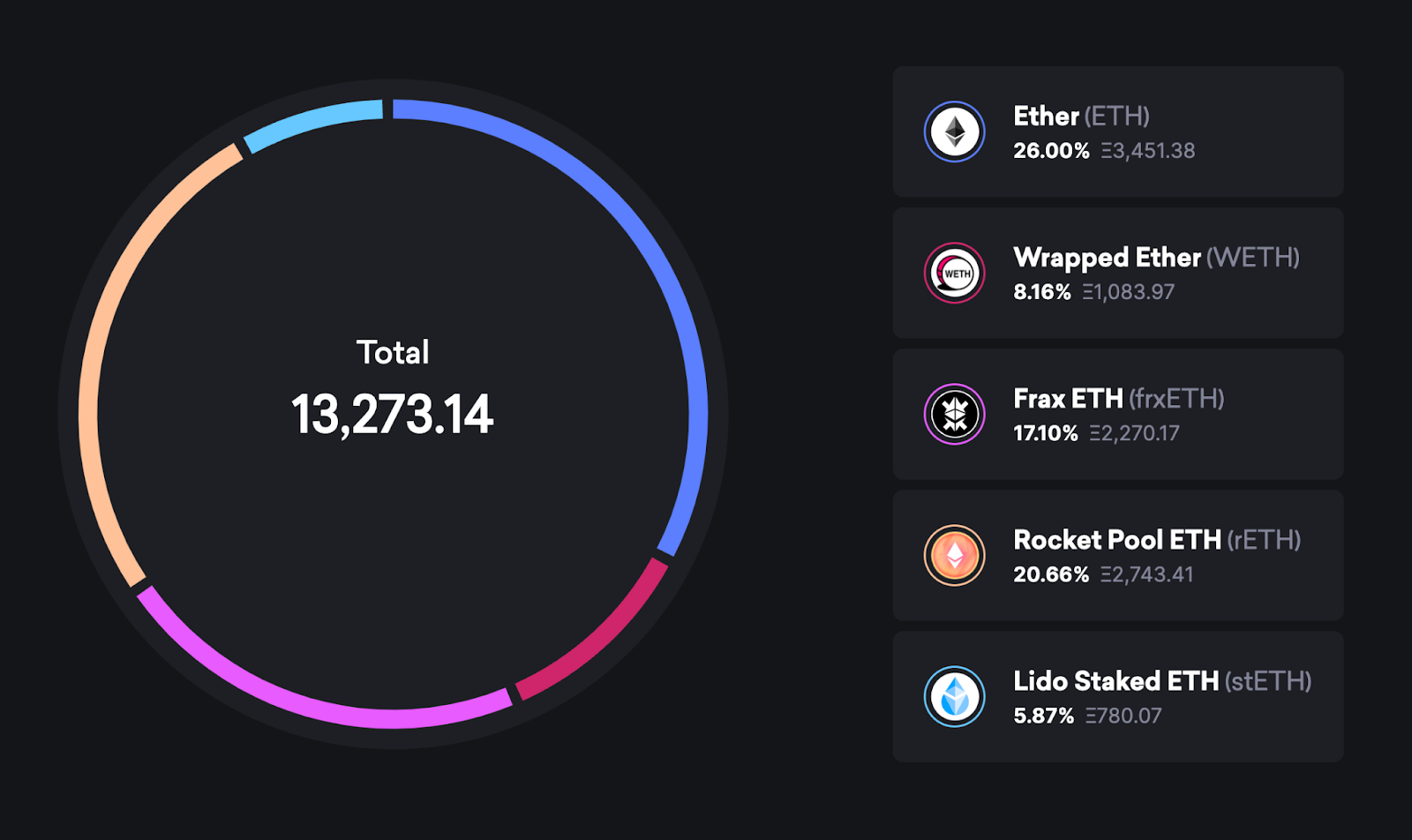
OETH leverages the best staking pools by using leading LSTs as collateral. OETH users deposit stETH, rETH, sfrxETH, or frxETH to mint OETH, as well as ETH or WETH. By simply holding OETH, holders passively earn a superior ETH yield because the underlying staked ETH liquidity earns rewards (see the breakdown above). As a result, OETH’s yield is always at least as high as the LSTs it utilizes. However, OETH employs additional strategies to ensure that yield remains consistently higher than pure liquid staking. This is achieved thanks to auto-rebalancing and an OETH liquidity provision on Convex and Curve. Supplied collateral is converted to OETH, which is then deposited to the OETH-ETH Curve pool in order to earn rewards.

The TLDR on this is:
- One can either hold OETH and passively earn OETH yield backed by a basket of liquid staked ETH strategies
- Or one can become an OETH-ETH LP on Curve/Convex and earn yield denominated in CRV/CVX tokens, but the OETH rebasing yield is forfeited in in this instance, which actually helps to increase OETH yield for those simply holding OETH
This design is very similar to what we’ve covered with Frax Finance’s frxETH vs sfrxETH. Only those holding sfrxETH (staked frxETH) earn the ETH-denominated staking yield whereas LPs in frxETH-ETH tend to earn an equivalent or higher yield denominated in CRV, CVX, and trading fees.
With 13,273 ETH deposited, OETH is currently boasting a trailing 30-day APY equal to 9.47%, as of this writing!
In terms of security, the OToken smart contracts have been audited by Trail of Bits and OpenZeppelin. OETH smart contracts were specifically audited again just for OETH (see here) by OpenZeppelin as of May 2023. The one “medium severity” issue related to an outdated data feed from Chainlink, appears to have been fixed.
Although OETH mostly consists of battle-tested code from OUSD, it’s important to note that the Admin multisig requires 5 of 8 signatures to be able to make upgrades in the unlikely event that a vulnerability is discovered. The OETH timelock is gradually being extended prior to the full transfer of ownership to OGV stakers, which prevents on-chain upgrades from taking effect without the Origin community having advance notice of any…
DeFi Dad is one of the earliest power users of DeFi, having worked with early Ethereum startups going back to 2018, including Zapper.