
Spool on Arbitrum: Earn Stablecoin Real Yields Up to 9% APY

Launched on Ethereum Mainnet in spring 2022, Spool Protocol is a decentralized middleware to create custom, diversified, and automated DeFi strategies. I commonly use the term “1-click DeFi” to describe Spool, given it offers vaults (aka spools) similar to the popular protocol Yearn Finance. In DeFi, we often require multiple transactions to execute even the simplest of strategies, but in order to truly democratize finance, DeFi developers have worked to further automate these strategies into vaults, which pool deposits and automate yield-earning strategies. One of the earliest and most popular Yearn vaults deposited stablecoins into Curve liquidity pools, staked the LP, and auto-harvested the CRV rewards, which were sold for more stablecoins and redeposited into the Curve pool.
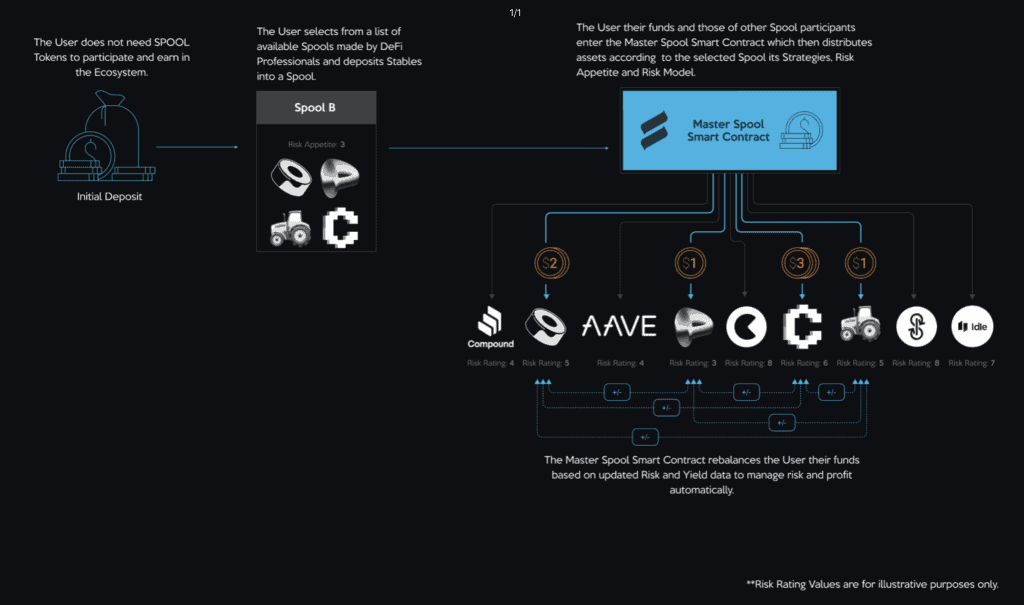
Spool offers a custom vault creator which allows users to select multiple strategies from a list of supported protocols, with a risk model to assign risk scores, and then set their risk appetite on a scale ranging from 0 to 10. Spool Protocol then deploys a smart contract that represents the strategies the user has chosen. Spool Protocol regularly rebalances portfolios while adhering to individual terms to ensure each individual Spool is optimized at all times in terms of risk-adjusted yield.
Related Articles

Stablecoin Farming: Earning 51% APR With New USD0 by Usual Money
Start earning yield with USD0 as well as points in the form of Usual Pills!

DeFi Farming with FBTC: A New Omnichain 1:1 Tokenized BTC
Get started earning with FBTC-powered DeFi!

Understanding How Index Coop’s Leverage Tokens Work for ETH and BTC
This week, we deep dive into automated leverage tokens by IndexCoop for those looking to gain more exposure to ETH or BTC, without having to worry about liquidations or funding rates.
Symbiotic Airdrop Strategy: Earning Points with weETHs Liquid Vault
Start earning an estimated 2.9% APY with weETHs along with points towards a Season 3 ether.fi airdrop, and future airdrops for Symbiotic and Veda.

Exploring DeFi on TON: Lending on EVAA Protocol
How you can earn passive yield lending to borrowers on EVAA and potentially a future airdrop!

INIT Capital Airdrop Strategy: Mantle’s Top Money Market
How to earn passive lending yield while accumulating INIT points towards a future anticipated INIT token airdrop.

Karak Pendle Strategy: Earning 22% Fixed APY with eETH
Take advantage of the demand for Karak YTs and buying Karak Pendle PTs to earn a fixed yield with my ETH.
Double-Digit Passive Yields: Leverage Strategy Vaults by Contango
Earn close to 50% APY with a Contango Strategy, thanks to the underlying yield of a popular Pendle eETH PT expiring June 24, 2024 on Arbitrum.

Leverage For Dummies: Earning Triple-Digit Yield with Origami Finance
Today, I’ll show how I can get maximum exposure to yield-bearing tokens such as sUSDe on Origami and earn maximum yield + points!
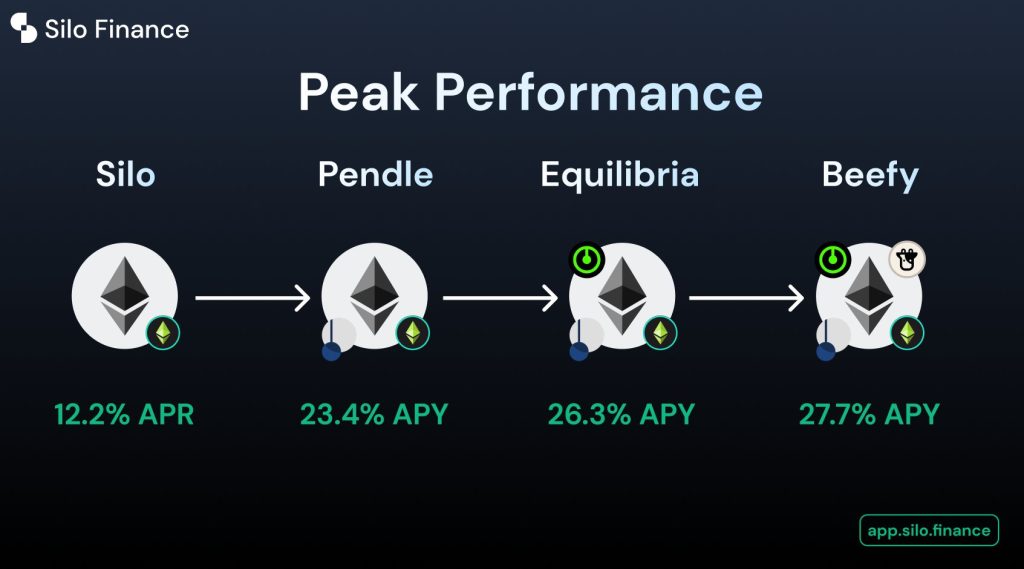
Beefy Finance Strategy: Earning Up To 47% APY Auto-Compounding Pendle ETH LP Yield
How you can start earning an estimated 47% APY with this four-part automated yield farming strategy for ETH, on Arbitrum.
Responses