
Earn Up to 31% APR with Stablecoins on GMX on Arbitrum


Before we get started, this is not a recommendation or endorsement to buy any token mentioned.
Last week, we covered the rise of “real yield” in DeFi. The flagship protocol for this trend among builders is the decentralized spot and perpetuals exchange GMX, live on both the Ethereum L2 Arbitrum as well as the L1 Avalanche. Trading on GMX is supported by a multi-asset pool that earns liquidity providers fees from market making, swap fees, and leverage trading. The pricing on GMX exchange is supported by Chainlink oracles and an aggregate of prices from leading volume exchanges. Ownership of this multi-asset pool is represented by buying the token GLP. GMX uses a two-token system whereby GLP holders earn 70% of trading fees in WETH + esGMX rewards and GMX stakers earn 30% of trading fees denominated in WETH + esGMX (vesting linearly, every second, over 1 year). See below how much GMX and GLP holders earned over the past week.

LPs can mint/buy GLP tokens, which represent shares in the GLP pool, by depositing any of the index assets below. They can redeem for any index asset by burning their GLP holdings as well. The fees associated with buying GLP vary depending on which of the GLP index assets are currently underweight or overweight. If an index asset is underweight (ie ETH, WBTC, UNI, USDT), one is incentivized to mint the GLP by depositing this asset for lower fees vs if an index asset is overweight in the pool (ie LINK, USDC, DAI, FRAX), then one is disincentivized to mint GLP with these assets due to higher fees.
Related Articles

Stablecoin Farming: Earning 51% APR With New USD0 by Usual Money
Start earning yield with USD0 as well as points in the form of Usual Pills!
DeFi Farming with FBTC: A New Omnichain 1:1 Tokenized BTC
Get started earning with FBTC-powered DeFi!

Understanding How Index Coop’s Leverage Tokens Work for ETH and BTC
This week, we deep dive into automated leverage tokens by IndexCoop for those looking to gain more exposure to ETH or BTC, without having to worry about liquidations or funding rates.
Symbiotic Airdrop Strategy: Earning Points with weETHs Liquid Vault
Start earning an estimated 2.9% APY with weETHs along with points towards a Season 3 ether.fi airdrop, and future airdrops for Symbiotic and Veda.
Exploring DeFi on TON: Lending on EVAA Protocol
How you can earn passive yield lending to borrowers on EVAA and potentially a future airdrop!

INIT Capital Airdrop Strategy: Mantle’s Top Money Market
How to earn passive lending yield while accumulating INIT points towards a future anticipated INIT token airdrop.

Karak Pendle Strategy: Earning 22% Fixed APY with eETH
Take advantage of the demand for Karak YTs and buying Karak Pendle PTs to earn a fixed yield with my ETH.
Double-Digit Passive Yields: Leverage Strategy Vaults by Contango
Earn close to 50% APY with a Contango Strategy, thanks to the underlying yield of a popular Pendle eETH PT expiring June 24, 2024 on Arbitrum.

Leverage For Dummies: Earning Triple-Digit Yield with Origami Finance
Today, I’ll show how I can get maximum exposure to yield-bearing tokens such as sUSDe on Origami and earn maximum yield + points!
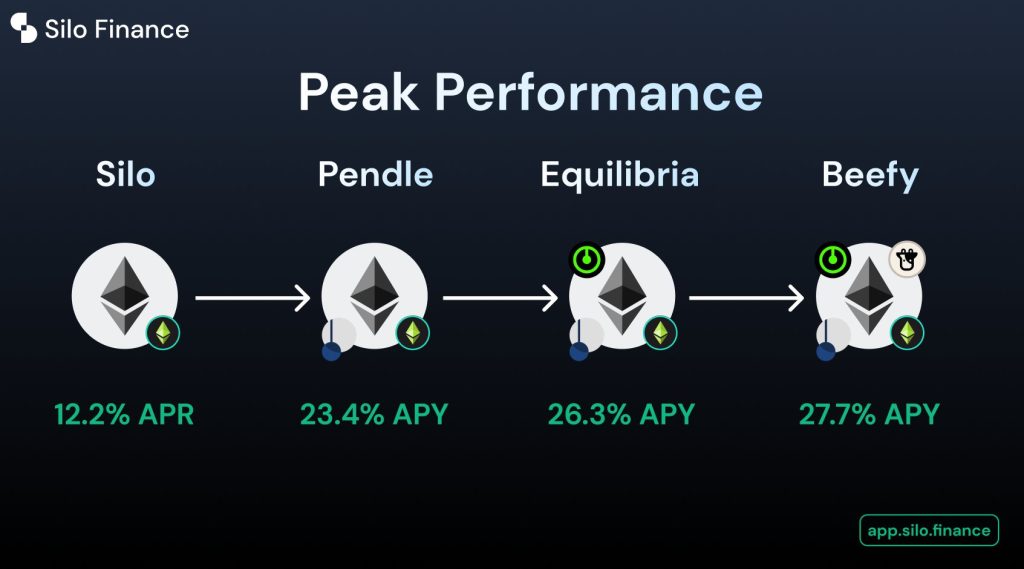
Beefy Finance Strategy: Earning Up To 47% APY Auto-Compounding Pendle ETH LP Yield
How you can start earning an estimated 47% APY with this four-part automated yield farming strategy for ETH, on Arbitrum.
Responses