
Optimism Real Yield: How to Earn 13.7% APY Looping OP


Before we get started, this is not a recommendation or endorsement to buy any token(s) mentioned.
One of the bright spots this crypto winter has been the growth of Ethereum L2s and their native tokens. Although it’s still early in the development of L2s, Optimism has managed to grow DeFi economic activity whether you measure it in trade volume or total value locked, while maintaining a multibillion-dollar fully diluted valuation (FDV) since its token launch following the aftermath of the 2022 Terra/UST collapse.
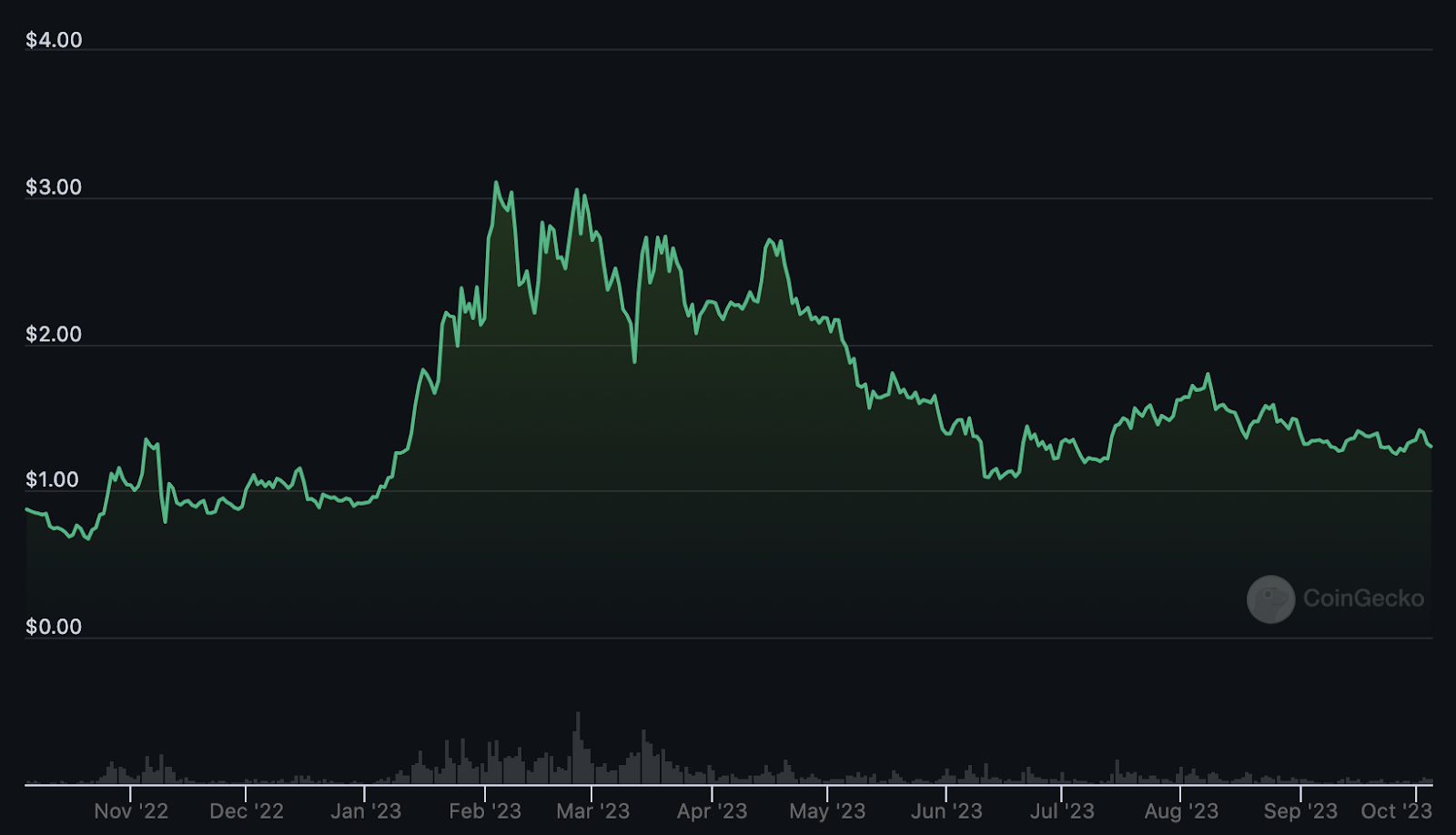
Optimism’s OP token now commands a $5.6B FDV priced at $1.30 per OP token. Although OP has become a well known token among DeFi traders and investors, OP’s utility remains somewhat limited to governance.
The Optimism Collective is “a band of companies, communities, and citizens working together to reward public goods and build a sustainable future for Ethereum.” The Optimism Collective is based on the idea that healthy public goods create a thriving and valuable ecosystem. With OP at the heart of it, the economics of this ecosystem are designed to generate value for three constituencies:
- Value accrues to tokenholders through the productive re-deployment of sequencer revenue. Sequencer revenue is primarily directed to fund public goods, which creates ecosystem value and drives demand for blockspace.
- Value accrues to contributors and builders directly from retroactive public goods funding and the markets it enables. Builders expect to benefit symbiotically, given it’s better to build in an ecosystem with well-funded tools, education, apps, and infrastructure.
- Value accrues to users and community members





Responses