Proto-Danksharding: A 10x Fee Reduction for Rollups on Ethereum is Close

TL;DR
The next big thing on Ethereum’s roadmap is Ethereum Improvement Proposal (EIP) 4844, called Proto-Danksharding. It is designed to improve the scalability of Layer 2s (L2s) built on top of Ethereum. And it’s only a prototype version on the way to full Danksharding. Proto-Danksharding is scheduled for Q3/Q4 this year with Ethereum’s Cancun hardfork. It should reduce L2 fees by at least a 10x and it’s only the beginning of Ethereum’s scalability journey.
Layer 2 chains (for example Arbitrum, Optimism, ZKSync Era) have come of age. A Layer 2 is a separate chain that inherits the security from the underlying layer-1 blockchain – in this case Ethereum.
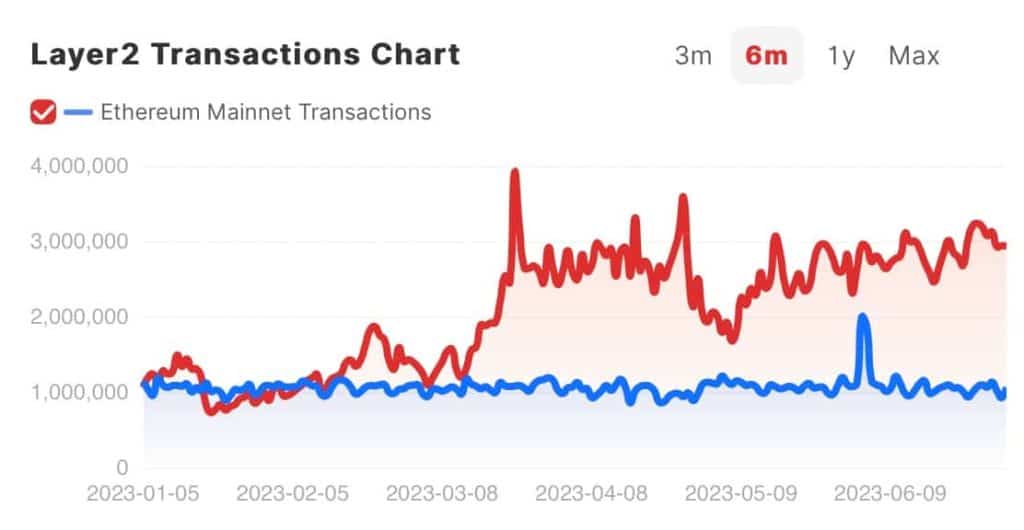
And… people are finally using Ethereum L2s. In fact, daily activity has been outpacing Ethereum main net through 2023. In the last two months, it’s been by nearly a 3:1 margin. Here’s the chart. Red is added Layer 2 transactions, blue line is Ethereum.
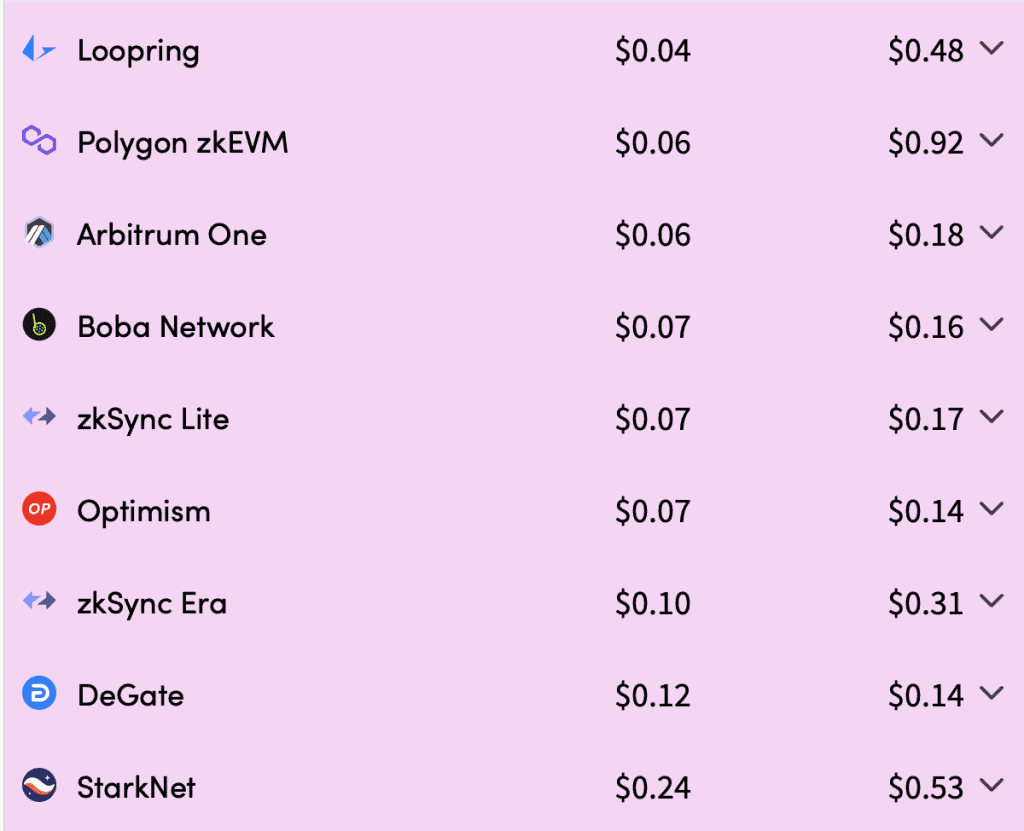
Now, as a precursor to our topic, let’s have a look at the current (July 2023) fees of L2s.
These fees look quite ok, but they’re not where they should be if we want to transact very often, in a way that would be required by regularly using large-scale applications like games and social media on Layer2s.
This is where sharding comes in. Sharding is a way to store data more efficiently. In computer science, sharding is a method of dividing a database into smaller, more manageable partitions called shards.
The confusing part here: there will be no sharding involved in the proto phase of Danksharding. Sharding will only happen during full Danksharding (more on that later).
What is Proto-Danksharding?
Proto-Danksharding is a way for L2s (or: rollups) to add data to blocks more cheaply. The name comes from the two researchers who proposed the idea: pseudonymous Protolambda and Dankrad Feist (not pseudonymous, the guy is actually called that).
Proto-Danksharding is a scalability upgrade. It’s all about a more efficient interaction between Layer 2 rollups and Ethereum.
How does this work? A rollup does a lot of processing independent of Ethereum. An L2 can process transactions and smart contracts but for data storage, it relies on Ethereum main chain. So, sooner or later, it has to touch base with the main chain. In jargon: L2s rely on the inclusion of batched transaction data in Ethereum blocks for transaction finality.
Currently, Rollups have to deal with the data-intensive and thus expensive process of posting so-called calldata to Ethereum. Roughly 90% of the transaction fees you pay on Layer 2s go to storing calldata on Ethereum main net.
Why are calldata expensive? Because they must be processed by all Ethereum nodes and live on chain forever – even though rollups only need the data for a short time!
Proto-Danksharding introduces data blobs that can be sent and attached to blocks. Think of these as sidecars attached to an Ethereum transaction. Instead of providing more space for transactions, Ethereum will provide more space for blobs of data.
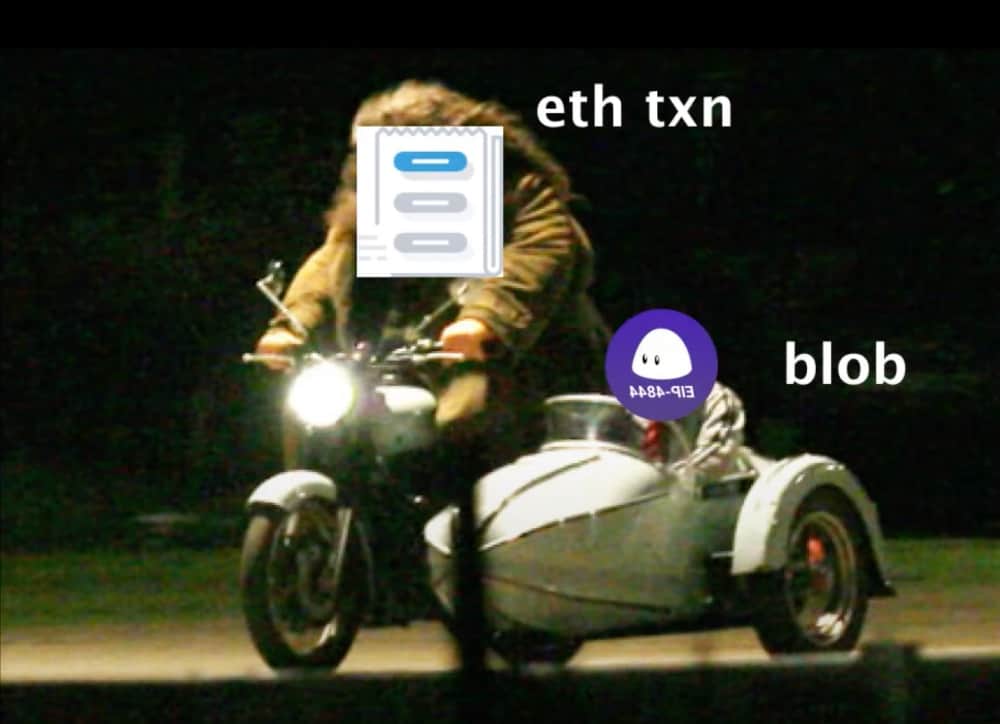
The data in these blobs are not accessible to the EVM and are automatically deleted after a fixed time period. This means L2s can send their data much more cheaply and pass the savings on to end users in the form of cheaper transactions.
What’s Next After Proto-DankSharding
As mentioned, Proto-Danksharding will go live in Q3/4 of 2023 and reduce fees by 10x or more. For what’s next, who better to ask than inventor Dankrad Feist? In an interview of March 2023, he states that Proto-Danksharding was designed with the goal of making upgrades really easy, without needing hardforks.
“There are some things we can probably do quite soon after. So, for example, some optimizations to more efficiently transmit the blobs on the network will make it probably possible to do a small amount of scaling, maybe a factor of two or four something. And I can see that quite soon, that might happen half a year to a year after the first implementation.”
A Separate Fee Market for L2s
A big part of Proto-Danksharding’s changes isn’t just a reduction in fees for users of L2s. It also creates a separate fee market for L2s. The fees for storing data blobs are charged in gas but the actual gas price will adjust up and down to target a certain number of blobs per block.
So, whereas now we have one fee market for on-chain data and execution, after Proto-Danksharding we will have two fee markets. Should gas fees spike on Ethereum main net – say from 10 gwei to 100 gwei – the price of blob transactions stays the same. The price per blob depends on how busy people are using L2s.
On the Roadmap: Full Danksharding
Full Danksharding is several years away. It will be the full realization of the rollup scaling. Data sampling techniques will make sure that blob data do not need to be downloaded in its entirety for verification by Ethereum full nodes, further reducing rollup costs.
The way this works is by expanding the blobs attached to blocks from 1 in Proto-Danksharding to 64 in full Danksharding. The rest of the changes required are all updates to the way consensus clients operate to enable them to handle the large new blobs. Several of these changes are already on the roadmap for other purposes independent of Danksharding. For example, Danksharding requires proposer-builder separation to first be implemented. This is an upgrade that separates the tasks of building blocks and proposing blocks across different validators.
Full Danksharding will bring massive amounts of space to Ethereum for L2s to dump their compressed transaction data. This means Ethereum will be able to support hundreds of individual rollups with ease and make millions of transactions per second a reality.
Conclusion
Scalability has been the number 1 issue on Ethereum’s roadmap. Proto-Danksharding is a relatively quick and easy win. The roughly 50x gains in phase two after the initial launch might just be enough for Ethereum to stay competitive when it comes to fees in (hopefully) the coming bull market. It might even allow for new use cases besides DeFi and NFTs – the use cases that popped up in the previous bull market. What will it be this time? Gaming, Social? With greater scalability, new use cases that were previously impractical suddenly become possible. We’re excited to find out!
 TOP RECOMMENDED CRYPTO SERVICES
  BINANCE: BEST EXCHANGE FOR BUYING CRYPTO IN THE WORLD
 10% OFF FEES & $600 BONUS
 BYBIT: #1 EXCHANGE FOR TRADING 0% SPOT FEES AND $4,450 IN BONUSES
 BEST CRYPTO WALLET TO KEEP YOUR ASSETS SAFE BUY LEDGER WALLET HERE
💻 BEST CRYPTO TAX SOFTWARE ON THE INTERNET GET COINLEDGER NOW
 BITGET: BITGET IS YOUR TICKET TO SEAMLESS AND REWARDING TRADING EXPERIENCES!
 $30,000 IN BONUSES